

When Men Play God
Bill Gates: Part 3, The Final Chapter

SECTION 1
The Long View
There is a particular kind of man who does not think in terms of years or even decades, but in generations. He is not concerned with elections, public opinion, or reputation among the masses. He thinks in systems, continuity, and control across time. Bill Gates fits that mold. His actions only make sense when viewed from a long-horizon perspective, one in which institutions outlive governments and private capital outlasts nations. This is not a man reacting to crises. This is a man preparing for outcomes.
Throughout this series, we have followed the money, the institutions, and the influence. What emerges is not randomness but intent. Health systems that require centralized compliance. Education systems that reshape how children think about authority and truth. Media systems that normalize the architecture and ridicule dissent. These are not isolated efforts. They are parallel tracks converging toward a future where decision-making is removed from the public and placed into the hands of planners, experts, and foundations that answer to no electorate.
This is where the question shifts. Not what Gates has done, but what Gates believes about humanity itself. His worldview treats people not as moral agents accountable to God, but as variables in need of management. Problems are not spiritual or ethical; they are technical. Salvation does not come through repentance, but through innovation. Order does not flow from truth, but from systems designed by those who believe they know better than everyone else. Once you see that lens, the rest of the story begins to snap into focus.
This mindset explains why Gates is drawn to institutions that persist beyond borders and governments. It explains why he invests in infrastructure rather than charity, in control mechanisms rather than relief. It explains why his interests repeatedly circle health, food, data, and education. These are not random concerns. These are the pillars of civilization. Whoever influences them influences the future.

Nothing about this requires imagination. It only involves pattern recognition. When one man places his fingerprints on the systems that decide who receives medicine, what children are taught, which narratives are amplified, and how food security is structured, it is no longer irrational to ask where this road leads. It is responsible.
Part 3 is not about proving an endgame. It is about asking the questions we were never encouraged to ask. Why this much preparation? Why this much consolidation? Why this obsession with resilience, continuity, and post-crisis planning? And why so much power concentrated in private hands that never submit to public accountability?
This is the long view.
And from here, the breadcrumbs begin to matter.
SECTION 2
Seeds, Food, and the Quiet Question of Control
Food is not just sustenance. It is power. Civilizations rise and fall based on who controls the means of nourishment, who decides what is grown, what is stored, and what is permitted to survive disruption. That reality has been understood for thousands of years, which is why the modern obsession with seed preservation deserves far more scrutiny than it receives. When a man whose influence already spans health systems, education frameworks, and media narratives also places himself at the center of seed banks, agricultural policy, and biotech funding, it stops being a coincidence and starts becoming a pattern.
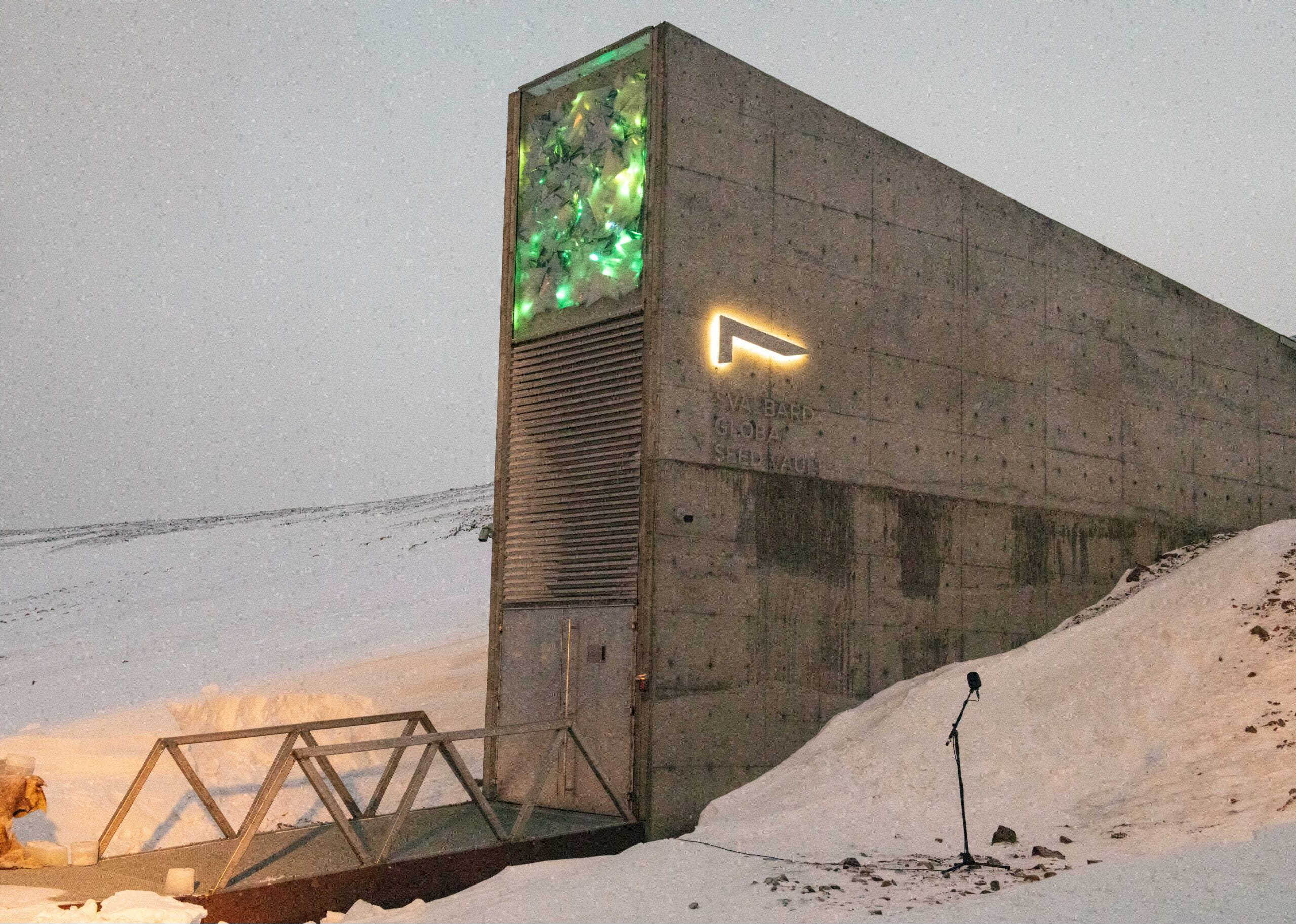
The Svalbard Seed Vault is presented to the public as an insurance policy for humanity, a frozen archive designed to protect crops in the event of war, disaster, or collapse. On the surface, that sounds noble. But dig just beneath the surface, and uncomfortable questions emerge. Bill Gates is not merely a casual donor to this effort. He funds the institutions that manage seed preservation. He funds the agricultural research bodies that decide which crops matter. He funds biotech companies that patent seeds. He funds policy initiatives that push farmers away from traditional seed saving and toward dependency on approved systems. The vault does not exist in isolation. It exists inside an ecosystem Gates helped build.
This is where symbolism matters. A centralized vault holding the genetic future of crops, backed by the same financial and ideological network shaping food policy across nations, represents something far bigger than disaster preparedness. It represents leverage. In a world increasingly defined by supply chain fragility and engineered scarcity, the ability to decide which seeds are preserved and which farming models survive becomes a form of authority more powerful than armies. Control food, and you control outcomes.
Gates has repeatedly emphasized resilience, sustainability, and transformation of agriculture. Those words sound benign until you ask who defines them. His vision favors industrial-scale solutions, patented seeds, digital monitoring, and centralized oversight. Traditional farming methods, local seed sovereignty, and generational knowledge are treated as outdated obstacles rather than safeguards. When policy follows funding, and funding follows ideology, farmers are left with fewer choices and greater dependence on systems they did not design.
This is not speculation pulled from thin air. It is the logical extension of everything already examined. Health systems are centralized. Education standardized. Media harmonized. And now food systems are consolidated under scientific management and private funding streams. The seed vault becomes less a backup plan and more a symbol of continuity for a world designed by planners who believe disorder must be eliminated rather than endured.
The question is not whether preserving seeds is wise. The question is who gets to decide the future of food when a crisis arrives. Who controls access? Who controls permission? Who controls survival? When the same names keep appearing across every pillar of life, it is no longer unreasonable to ask whether humanity is being preserved or curated.
From here, the trail continues. Health, food, and data do not operate separately. They converge. And that convergence is where the final shape of this system begins to reveal itself.
SECTION 3
Health, Food, and Data Converge
At some point, it stops being about any single system and starts being about integration. Health does not stand alone. Food does not stand alone. Education does not stand alone. What binds them together is data. Data is the connective tissue that allows planners to see populations as patterns, behaviors as metrics, and human life as something measurable, sortable, and manageable. Once data becomes the organizing principle, control no longer requires force. It requires access.
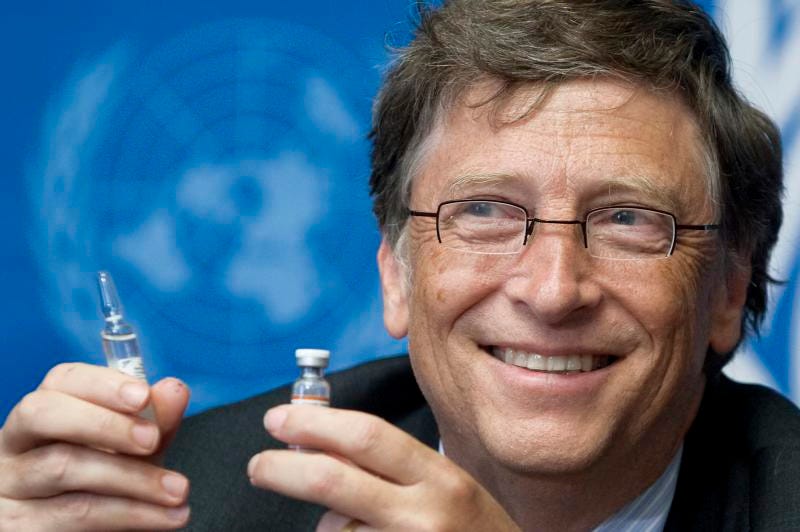
In health systems, this manifests in digital records, vaccine registries, biometric identifiers, and compliance-based care. Participation increasingly depends on being logged, verified, and approved within a centralized framework. In food systems, this is evident through crop monitoring, genetic cataloging, supply chain tracking, and policy enforcement tied to sustainability metrics. Farmers are nudged, then pressured, then regulated into systems that report upward rather than serve locally. In education, data becomes the backbone of assessment, behavior tracking, learning profiles, and predictive modeling. Children are reduced to dashboards long before they are old enough to consent.
That is what makes them dangerous together. When health data, food access, educational credentials, and digital identity intersect, participation in society becomes conditional. Access replaces freedom. Permission replaces rights. A person does not need to be imprisoned to be controlled. They only need to be disconnected from the systems that allow them to live.
This is where Gates’ long-standing obsession with measurement, metrics, and scalable solutions takes on a different tone. His worldview prizes efficiency over wisdom and management over morality. Human beings are treated as problems to be optimized rather than souls accountable to God. Disorder is not something to endure. It is something to eliminate. And elimination always requires oversight.
The convergence of health, food, and data creates a world where crises become opportunities for consolidation. Each emergency justifies another layer of tracking. Each disruption demands another centralized solution. Each failure of a system becomes the excuse to expand it. And because these frameworks are introduced through philanthropy, science, and safety, resistance is framed as ignorance or threat.
This is not about predicting a single outcome. It is about recognizing direction. When the same financial interests shape the systems that decide who is healthy, who is fed, who is educated, and who is informed, society drifts toward a managed existence. Not ruled by kings. Not governed by laws. But administered by experts and foundations whose authority comes from wealth, not consent.
From here, the final question comes into view. This is no longer about Bill Gates alone. It is about the worldview driving the system itself. And that worldview has no room for repentance, limits, or submission to anything higher than human reason.
SECTION 4
The Question That Cannot Be Avoided
At the end of this trail, the issue is no longer whether Bill Gates is influential. That case is settled. The issue is whether any single private actor should be allowed to shape the systems that decide who receives care, who eats, who learns, how children are taught, what they are taught, and which ideas are permitted to circulate. The power of this scale does not remain neutral. It expresses itself. It imposes priorities. And it reshapes the world in its own image.
What we have examined across these three parts is not a series of disconnected projects, but a unified vision. Health systems are designed around compliance and centralized oversight. Food systems are built on dependency, patent control, and managed scarcity. Education systems that condition children to trust experts over truth. Media systems that normalize it all and frame dissent as danger. None of this requires imagination. It only requires honesty and the willingness to follow patterns wherever they lead.
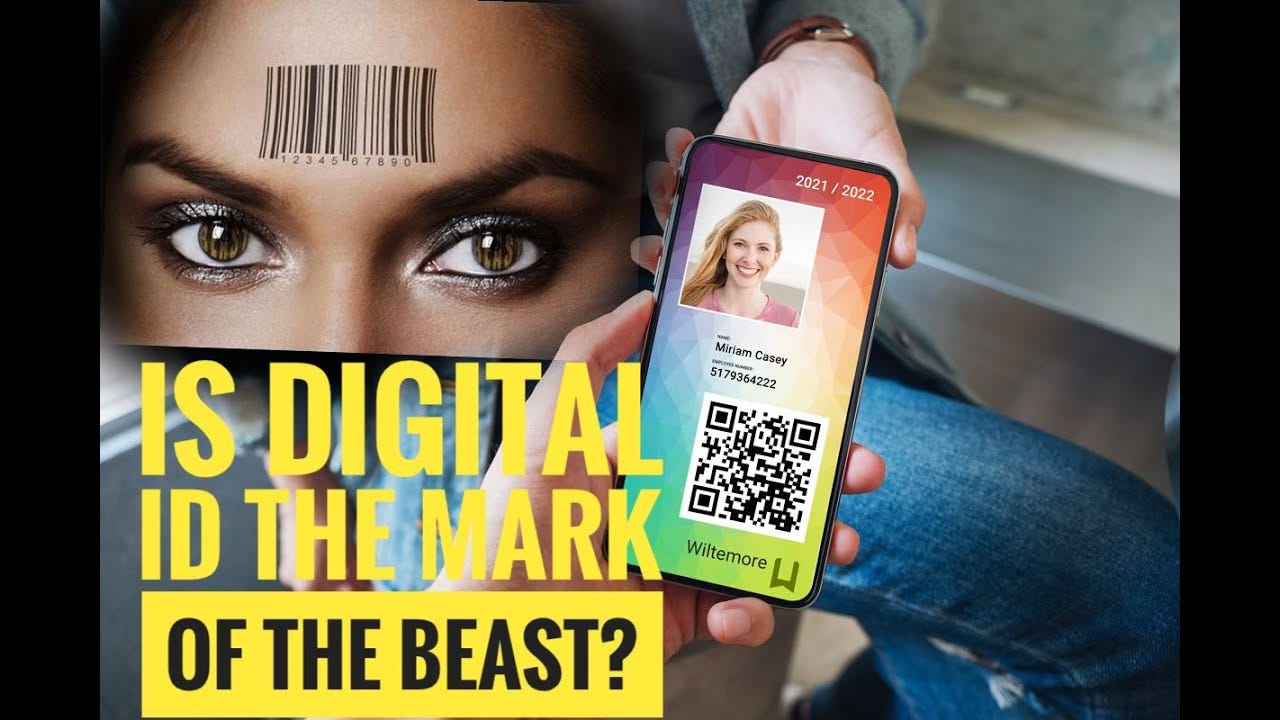
This vision is not biblical. It does not see man as fallen and in need of redemption. It sees man as defective and in need of management. It does not believe that truth sets people free. It believes systems do. Salvation is no longer repentance and grace, but innovation and control. Order is not rooted in God, but in data, metrics, and planners who believe they know better than the people whose lives they organize.
Scripture warned us this day would come. A time when knowledge would increase, when power would concentrate, when men would exalt themselves as saviors of humanity while rejecting the authority of God. The danger was never a single individual. The threat is a worldview that believes humanity can be perfected without Christ, governed without consent, and preserved without accountability.
This is why this matters. Not because fear should drive us, but because discernment must. We were not created to be optimized, tracked, curated, or managed. We were created to be image bearers, accountable to God alone. Any system that forgets that truth, no matter how well-funded or well-marketed, will ultimately serve domination rather than life.
The reader is left with a choice. Accept the story as it is sold, or investigate the breadcrumbs and decide for yourself. But understand this much. When private power grows this large and this insulated, silence is not neutrality. Silence is permission.
This series ends here. The questions do not.
Check out the new website https://www.thefacthunter.com