

When “Climate Tech” Becomes Climate Roulette
A US–Israeli Venture, a Shaded Sun, and the Dangerous Assumption That Consent Is Optional

Something worrying just hit the headlines: a little-known US-Israeli start-up called Stardust Solutions is planning to begin outdoor solar geoengineering experiments as early as April 2026 — essentially tinkering with the atmosphere to reflect the sun’s heat. This isn’t some distant research project tucked away in a lab; it’s public, privately funded, and gearing toward commercial deployment this decade.
That should alarm everyone, and here’s why.
A Startup Playing God With the Sky
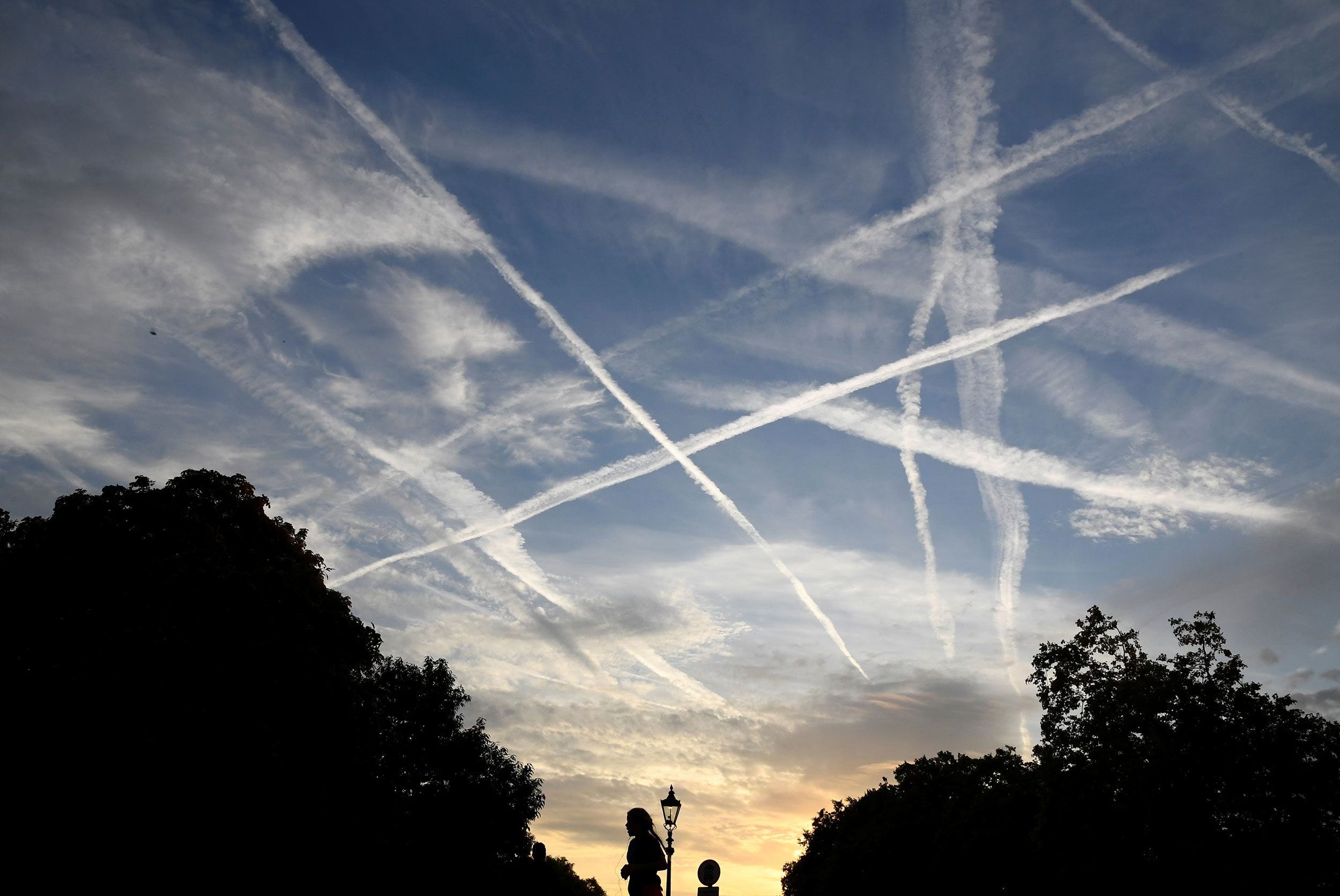
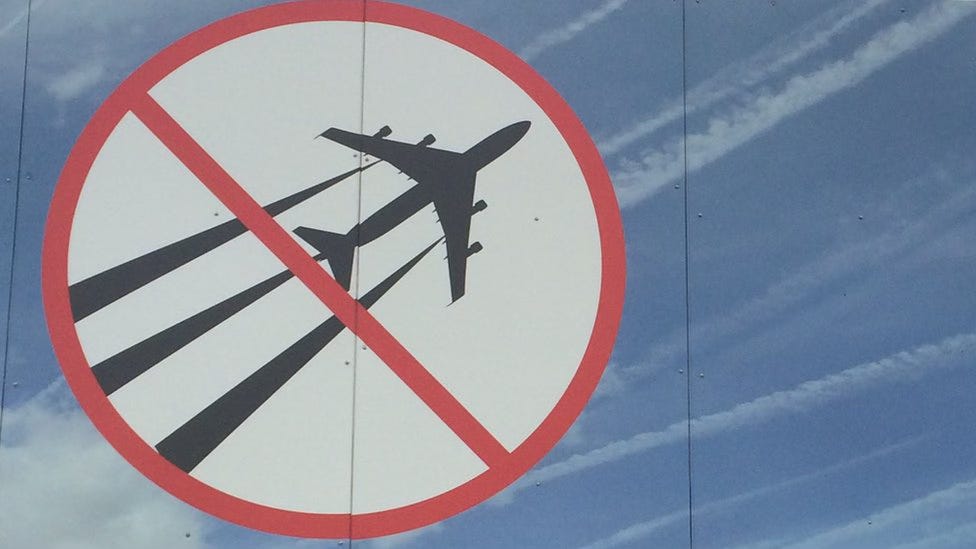
Solar geoengineering isn’t science fiction, it’s a real suite of technologies. The most talked-about being stratospheric aerosol injection, where particles are lofted into the upper atmosphere to block a slice of sunlight. In theory, it “cools the planet.” But in practice, it’s unpredictable. Scientists still debate its safety, impact on weather patterns, and long-term effects. Not to mention the poisonous materials that are found in Chemtrails, such as Barium and Aluminum.
Chemtrails are real. Barium and Aluminum Baal clouds
And Stardust? They’re backed by tens of millions of dollars from Silicon Valley venture capitalists and European industrial investors. They plan atmospheric tests that could lead to actual deployment, not just “study.”
That’s not conservative research. That’s betting billions on weather control before anyone fully understands the deck of cards they’re playing with.
The Risks Are Real — And Uneven
Let me be clear: messing with the planet’s climate is not like adjusting an app’s settings. Solar geoengineering could:
Disrupt weather systems that billions depend on for rain, food, and seasons.
Create winners and losers — some regions might cool while others face droughts or monsoon shifts.
Trigger political conflict over who gets to “set the thermostat.” (See HAARP)
Lock us into dependence on continuous intervention. If you start geoengineering and then stop, you can face a rapid spike in temperatures known as a “termination shock.”
This isn’t speculative alarmism. Even advisory bodies and scientists acknowledge the weight of these unknowns.
International Law Is Already Being Ignored
Stardust’s plans may also violate existing norms. The Convention on Biological Diversity, a framework dozens of countries have supported, has essentially put a moratorium on outdoor geoengineering. Yet here we are with a startup preparing outdoor tests.
This isn’t just about science, it’s about law, consent, and who gets a say in altering the atmosphere.
The Private Sector Is Not the Right Pilot
Here’s where it gets even messier.
Climate technology is now a for-profit venture. That means:
The goal isn’t public good, it’s returns on investment.
The stakeholders are not elected governments, but venture capital and private equity interests.
The people most affected, the billions across Africa, Asia, Latin America, have zero formal say in whether their skies are geoengineered.
When you combine high finance with manipulation in the skies, you don’t just get innovation. You get world-wide risk managed by boardrooms, not citizens.
What We Should Reject, Plainly
This is where many people pull back and try to qualify their concern. They say geoengineering might be acceptable if it is done carefully, transparently, and with the right oversight. That is the wrong starting point. The problem is not that these schemes lack proper governance. The problem is that they exist at all. Altering the atmosphere is not stewardship. It’s experimentation on creation itself. No amount of committees, consent forms, or regulatory language can make that moral or wise. The sky is not a public utility to be managed, and it is not a laboratory to be rented out to private interests or state planners. Some technologies do not need better rules. They need firm refusal. Geoengineering belongs in that category, and it should be opposed outright, before it becomes normalized as just another tool of human control.
When Man Reaches for the Sky
There is a line that humanity crosses again and again, usually with good intentions and disastrous consequences. It’s the moment when stewardship quietly becomes control, and humility gives way to hubris. Scripture has language for this. The Bible does not treat creation as raw material to be endlessly engineered. It treats it as something spoken into being by God, sustained by His hand, and governed by laws He alone fully understands.
“The earth is the Lord’s, and the fulness thereof; the world, and they that dwell therein” (Psalm 24:1). That sentence alone should stop every geoengineering pitch deck cold. The atmosphere does not belong to investors, governments, or startups. It does not belong to scientists, no matter how credentialed. It belongs to God.
From the beginning, man was given dominion, not ownership. Adam was placed in the garden “to dress it and to keep it” (Genesis 2:15), not to redesign it, override it, or experiment on it from above. Stewardship is not the same thing as mastery. Caring for creation is not the same thing as attempting to rewire it.
Scripture consistently warns against the arrogance of believing we can improve upon God’s design. Job is confronted by the Lord not with explanations, but with questions: “Where wast thou when I laid the foundations of the earth? declare, if thou hast understanding” (Job 38:4). God does not ask Job to help Him manage the weather. He reminds him who controls it. He speaks of storehouses of snow, the pathways of the winds, the ordinances of heaven. These are not systems entrusted to man’s discretion.
And yet here we are, watching private ventures discuss dimming the sun as if it were a software bug. The same sun God appointed “for signs, and for seasons, and for days, and years” (Genesis 1:14). The same heavens that “declare the glory of God” (Psalm 19:1). To interfere with these systems without humility, consent, or reverence is not neutral science. It is presumption.
The Tower of Babel stands as a warning, not because bricks were evil, but because the heart behind the project was. “Let us build us a city and a tower, whose top may reach unto heaven” (Genesis 11:4). It was mankind asserting independence from God under the banner of progress and unity. God’s response was not applause. It was restraint.
That pattern has not changed.
Scripture reminds us that wisdom begins with the fear of the Lord, not confidence in our tools. “There is a way which seemeth right unto a man, but the end thereof are the ways of death” (Proverbs 14:12). Technological capability does not equal moral permission. Being able to do a thing has never been the biblical standard for whether we should.

Climate fear, like every fear, becomes dangerous when it justifies crossing boundaries God never authorized us to cross. The answer to human excess has never been more control, more manipulation, or more centralized power. The answer has always been repentance, humility, and obedience.
Messing with God’s creation from the stratosphere is not wisdom. It is the same old temptation dressed up in modern language: trust ourselves instead of trusting God. And Scripture has already told us where that road leads.
“The Lord by wisdom hath founded the earth; by understanding hath he established the heavens” (Proverbs 3:19). Until man can claim that level of wisdom and understanding, the sky does not need our experiments. It needs our restraint.
4th floor, Cory Hall, 7G Smart Dust, breath it deep like a sauna, what could possibly go wrong, wait wait what about Faucis face diper and some emerald sunglasses, follow the yellow brick road into a cremation oven