

When Brothers Bleed Over Borders
Three years later, the spiritual cost of Christians killing Christians

I’ve been sitting here for a while, staring at the calendar and thinking about the fact that we’re approaching three years since February 2022. In ordinary life, three years is enough time for a child to learn to read, for a couple to welcome a new baby, for a pastor to bury saints and baptize new believers, for a church to see prayers answered in ways no one expected. In war, three years is long enough for death to become routine, long enough for the shock to wear off, long enough for people to build their opinions into identities, and long enough for grief to become a background noise that never leaves the room.
Numbers don’t tell the whole story, but they do expose the scale of what has happened. And pretending otherwise is another kind of dishonesty. The low side of the numbers indicate more than 15,000 civilian deaths and over 41,000 civilian injuries since the war began. Those figures are not presented as complete totals, because verified counts depend on access and evidence, and war often prevents both. Even so, verified means something. It means these are not rumors. It means these are names and bodies and funerals, and it means many more are likely uncounted.
Military losses are even harder to quantify with certainty. Different institutions publish estimates, and each estimate carries its own assumptions. Still, even conservative assessments put the combined casualties in the hundreds of thousands, with totals that climb when wounded and missing are included. That’s the kind of loss that doesn’t just change the front line. It changes families, villages, churches, and entire generations.
Russia and Ukraine don’t release detailed figures for their combat casualties. The average numbers reported from western media is as follows: Ukrainian casualty tolls are about 500,000 to 600,000 – compared to Russia's 1.2 million – killed, wounded and missing, according to report.
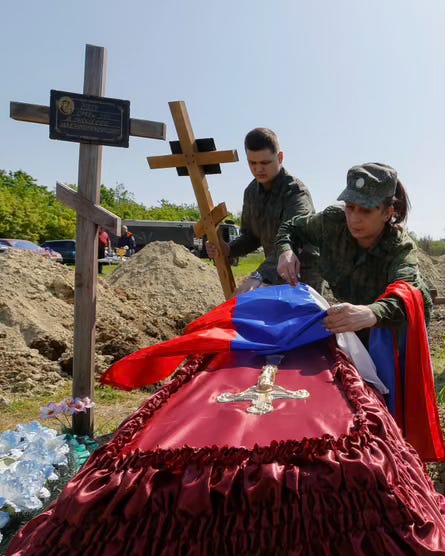
Will we ever get the actual numbers? Of course not. However, the collateral damage from war often gets overlooked.
Millions have been pushed from their homes. Some fled across borders, others moved within their own country, and many live with the constant pressure of not knowing whether they will be forced to move again. Displacement is not just a logistical issue. It is a spiritual weight that breaks routines that keep people stable. It fractures communities. It makes ordinary faithfulness harder; not because God is absent, but because exhaustion is real and trauma does not fade easily.
All of that is true, and all of it is awful, but the part that will not leave me alone is the question believers should be asking out loud and without flinching. How many Christians have taken the lives of their fellow Christians in the name of a border?
I’m going to be careful here, because carelessness is one of the sins of the internet. I cannot give you a clear number, and neither can any government or research institution. Armies do not confirm baptism records, they do not test church membership, and they do not sort bodies by confession of faith. No one can responsibly publish a “Christian versus Christian” death count with the kind of proof that would satisfy an honest reader.
But the moral reality remains. Both Russia and Ukraine are majority Christian by self identification, with deep Orthodox roots and substantial church life in both societies. That means many combatants on both sides have been raised under Christian influence, have called themselves Christian, and in many cases have participated in Christian worship and Christian rites. If the casualty figures are anywhere near what serious estimates suggest, then the tragic conclusion is unavoidable. A great many who claim Christ have killed others who also claim Christ.
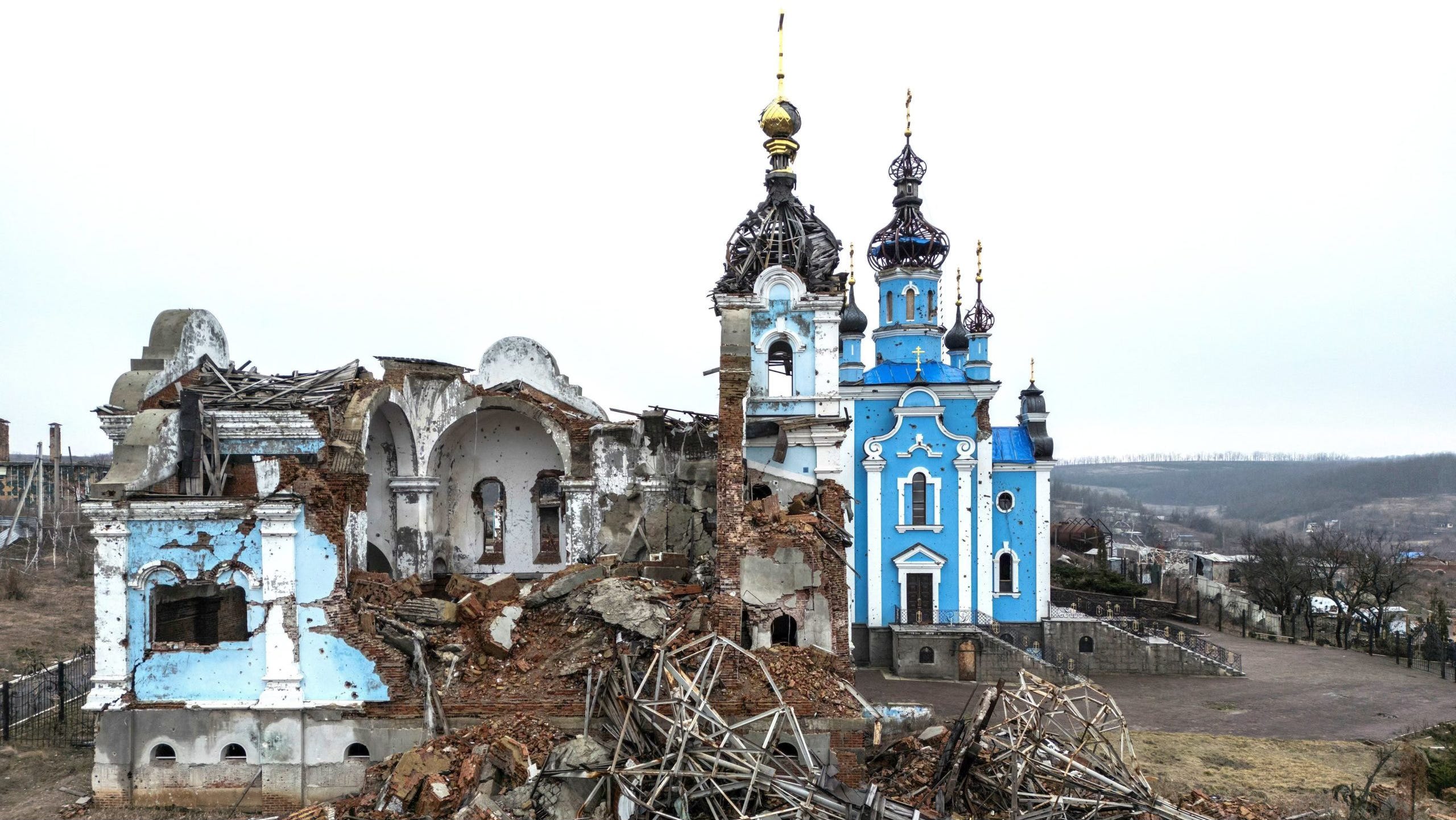
That shouldn’t be treated as an interesting angle; It should be treated as a moral catastrophe.
Scripture doesn’t give the church permission to treat other believers as disposable pieces on a geopolitical chessboard. Jesus said, “All ye are brethren.” James asks the question most people avoid because it hits too close to home: “From whence come wars and fightings among you?” He doesn’t begin with territory, he begins with the heart. He points to desire, pride, envy, and the wars that rage inside people long before they rage across fields.
So why do we support war so quickly, so instinctively, and sometimes so enthusiastically? We’re always quick to choose a “team”, which is another “divide and conquer” ploy of the NWO.
Some support it because they believe it’s necessary to restrain evil. They speak of defense, sovereignty, protecting the innocent, and deterring future aggression. Those are not silly concerns, and it’s not wise to dismiss them with a wave of the hand. Governments (to a certain extent) bear responsibility for protecting citizens, and Scripture recognizes that rulers can be used to restrain wrongdoing. At the same time, acknowledging responsibility is not the same thing as celebrating bloodshed, and this is where many Christians have drifted into something darker than they realize.
Because there is another reason war receives such eager backing, and it has less to do with righteousness than with what war does for systems of power. War concentrates authority, expands budgets, increases censorship, and turns dissent into suspicion. War also creates a constant emotional climate, a daily sense of emergency that makes people more willing to surrender judgment (and freedoms) to whoever speaks most confidently. When a society is afraid, it becomes easier to manage, easier to manipulate, and easier to divide (see 2020).
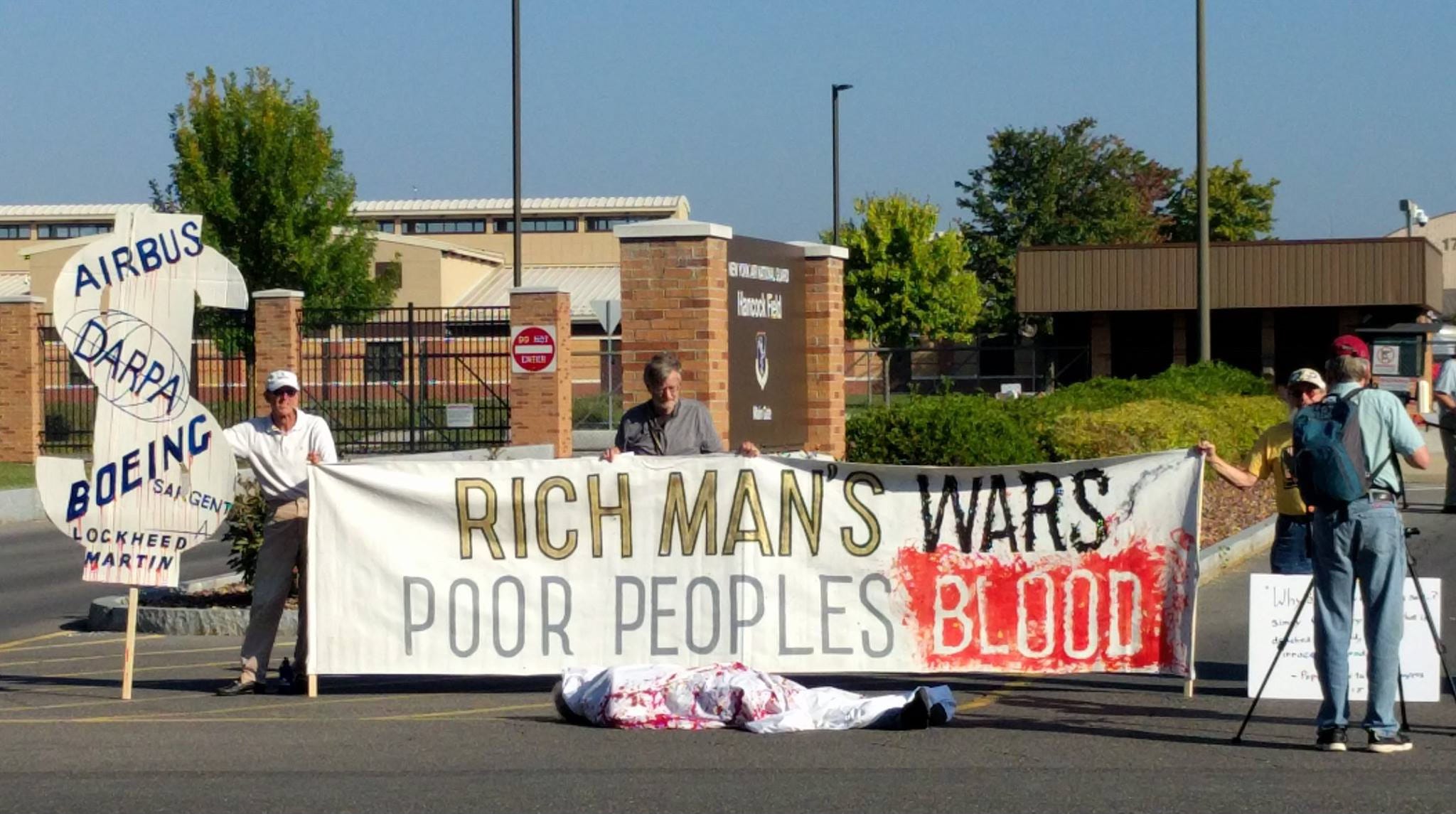
That division is not accidental. It’s from the playbook they’ve been using for thousands of years. Divide, conquer, and control.
Jesus didn’t mince words when He spoke of the devil. He called him a murderer from the beginning. He described him as a liar, and not merely a liar in the casual sense, but a liar whose lies deform reality and poison the soul. Satan’s endgame is not simply to win an argument or shift a boundary line. His endgame is to ruin what God calls good, to corrupt what God calls holy, and to make destruction feel normal. War serves that endgame in more ways than most people want to admit.
It trains people to accept death as ordinary. It teaches the young to harden themselves. It turns neighbors into categories and categories into targets. It conditions men to kill and then pretend they can simply switch that off when they return home. It pushes entire populations toward resentment, vengeance, and dehumanizing speech, and those habits do not stay contained on the battlefield. They spill into homes, into churches, into the way people talk about one another, and into the way Christians begin to treat fellow image bearers.
This is where the church must examine itself honestly, before God.
The Bible doesn’t allow us to pretend that hatred is a virtue when it’s wrapped in patriotic clothing. The Bible does not teach believers to rejoice when enemies suffer. The Bible calls us to mourn, to pray, to plead for mercy, and to remember that every person we are tempted to reduce to a label is someone made in the image of God. James also warns that with the tongue we bless God and curse men who are made after the similitude of God, and he says plainly that these things ought not so to be.
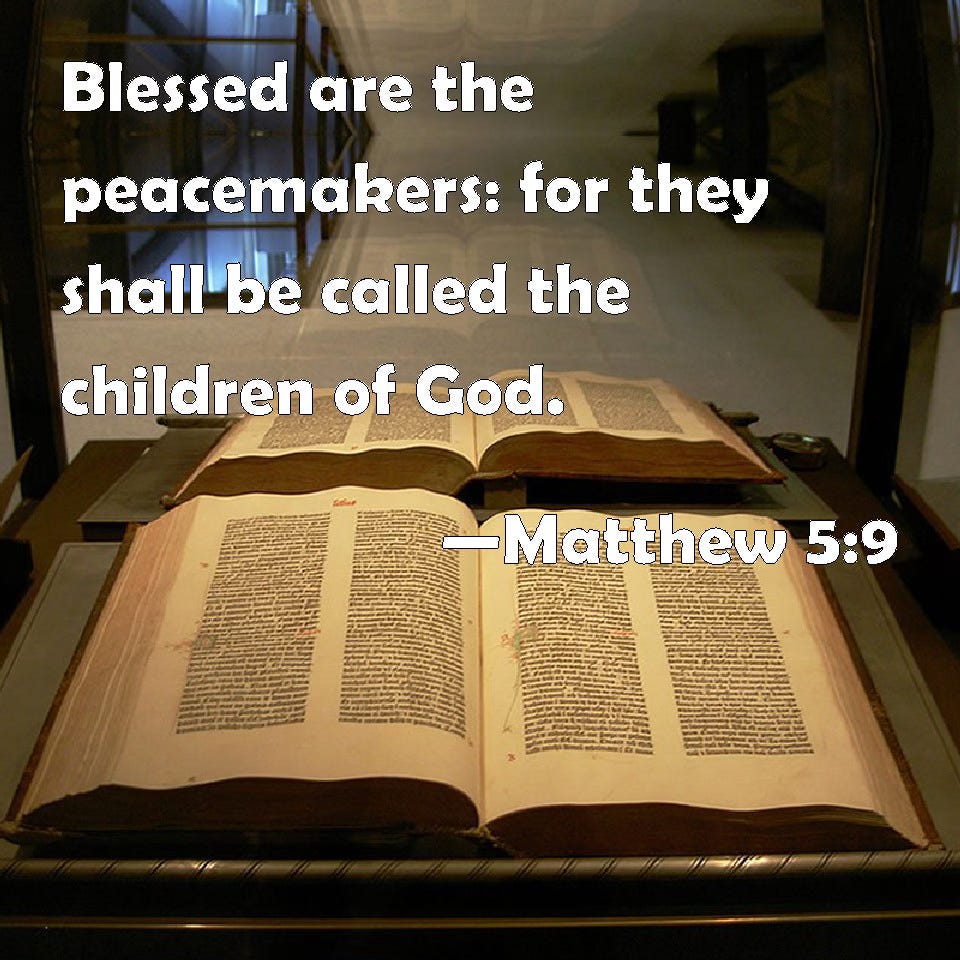
A Christian who can watch mass death unfold and feel nothing has not become strong. He has become numb, and numbness is not spiritual maturity. It’s a warning sign.
There is also a kingdom issue here that many believers avoid because it disrupts their political comfort. Jesus said, “My kingdom is not of this world.” That doesn’t mean Christians abandon concern for justice, or refuse to love their neighbors, or retreat into indifference. It means we refuse to confuse earthly loyalties with eternal allegiance. It means we remember that the church is not a project of state power, and the gospel is not a tool of national strategy.
Our citizenship is in heaven. That truth does not make a Christian less compassionate. It should make him more compassionate, because it reminds him that every soldier, every civilian, every grieving widow, and every orphaned child will stand before God.
It also reminds him that no flag, no slogan, and no border is worth losing the tenderness Christ commands.
So what should believers do, right now, as this war drags into a fourth year?
We should stop speaking about death as if it were an abstraction. We should refuse language that turns human beings into vermin, monsters, or animals, because once a Christian starts talking that way, he is already being discipled by something other than Christ. We should pray for rulers, not as a formality, but as a real plea that God restrains evil and grants wisdom where wisdom is clearly absent. We should pray for civilians, for the displaced, for those without power who are paying the highest price. We should pray for repentance where there is cruelty, for conversion where there is spiritual blindness, and for mercy where hearts have been hardened by propaganda and grief.
We should also examine ourselves.
War exposes what people already love. It reveals whether a believer’s deepest loyalty is to Christ or to tribe. It shows whether compassion is real or merely something we say when it costs nothing. It tests whether we actually believe the gospel applies to human beings we have been trained to despise.
Now I’m going to say something from a personal perspective, not political. I’m saying it carefully because it’s easy to be misunderstood in times like these. I’m not pretending that every moral question in war has a simple answer. I’m not claiming that defending the innocent is always wrong, or that the world has no place for restraint of evil. I’m saying something more basic, and more urgent. Many Christians have become comfortable with war in a way that does not resemble the mind of Christ.
We have learned to call destruction normal. We have learned to treat bodies as statistics. We have learned to speak about human suffering as if it were a necessary ingredient in the machinery of history. And while we are doing that, Satan is doing what he has always done. He is pushing humanity toward hatred, toward dehumanization, toward despair, and toward the belief that violence is the truest form of power.
The gospel says otherwise.
Christ did not conquer by killing; He conquered by dying. He didn’t build His kingdom with weapons; He built it with truth, with holiness, with sacrificial love, and with a cross planted in the ground like a warning to every empire that thinks it can save the world through bloodshed.
So here is my conjecture, written from this desk as a shepherd of souls and a witness to war’s cost. Satan’s endgame is not simply the destruction of cities. It’s the destruction of conscience. If he can make Christians cheer for death, he has already won a victory, even if borders never move another inch. If he can make believers forget that the cross is the only banner that saves, he has pushed the church into spiritual confusion. If he can make the body of Christ mirror the rage of the world, he has weakened our witness and numbed our love.
I don’t know how this war ends in terms of treaties, lines on a map, or political outcomes. I do know how it should end in the church. It should end with believers refusing to surrender their hearts to hatred, refusing to trade prayer for propaganda, and refusing to let death become entertainment.
And it should end with us returning to the only hope that has ever been real, the only kingdom that will not collapse, and the only Savior who can heal what war tears apart.
Lord Jesus Christ, have mercy. Amen.