

Two Decisions, One Nation's Decline
How abandoning sound money and legalizing abortion reshaped America's moral and economic future.

History is often measured by wars, elections, and assassinations. Sometimes, however, the course of a nation changes with two signatures separated by only seventeen months.
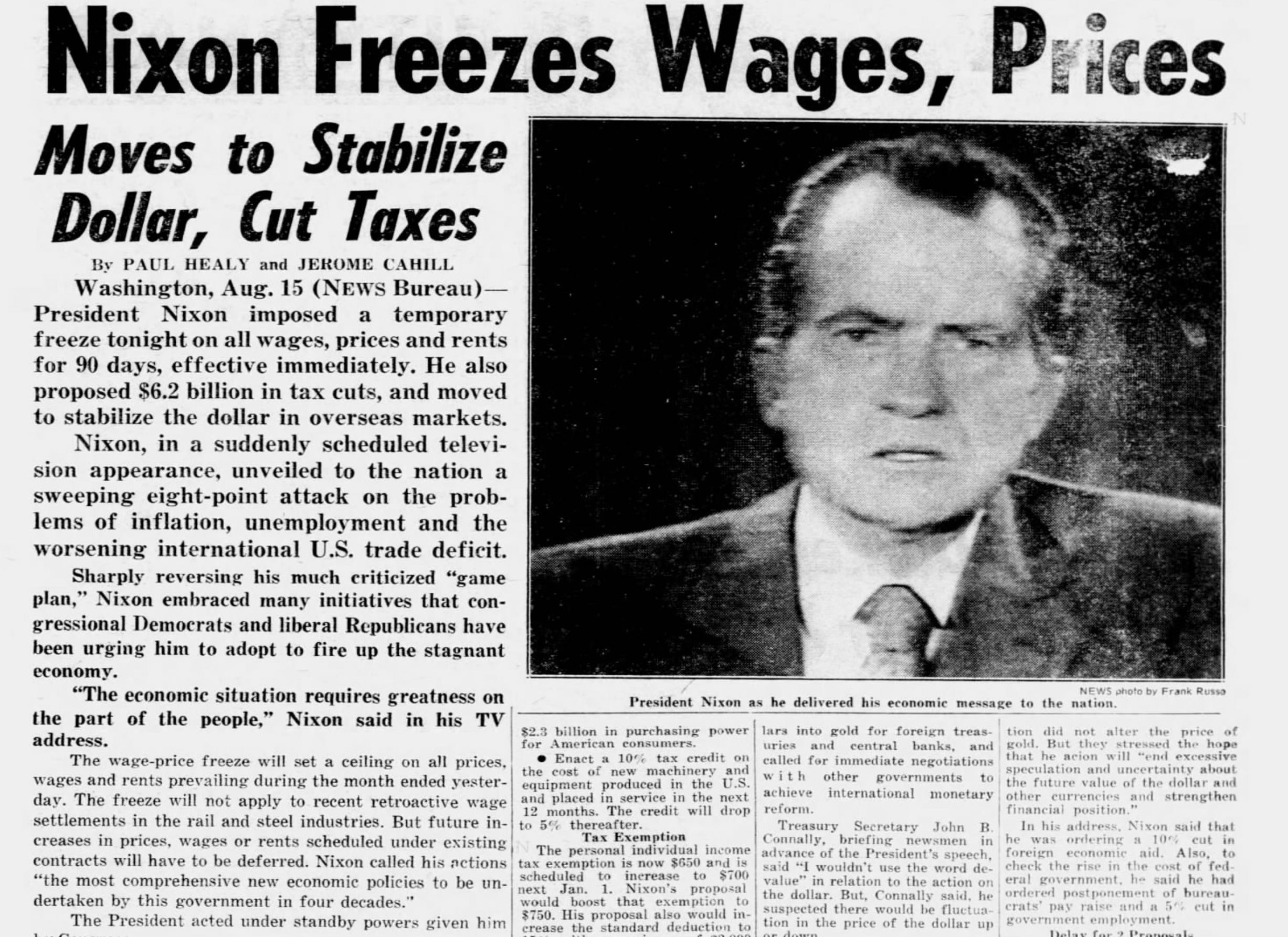
On August 15, 1971, President Richard Nixon ended the dollar’s convertibility into gold. The United States entered the age of fiat currency. For the first time in American history, the dollar was no longer anchored to a tangible standard. At the time, the national debt stood at roughly $398 billion. More than five decades later, it has surpassed $39 trillion. Since then, every president, regardless of party, has added to the debt. Congress abandoned fiscal restraint, deficits became a permanent feature of government, and the Federal Reserve normalized the expansion of the money supply to sustain a system no longer anchored to gold. A nation once restrained by fiscal discipline embraced a system limited only by political will.
Just seventeen months later, came January 22, 1973.
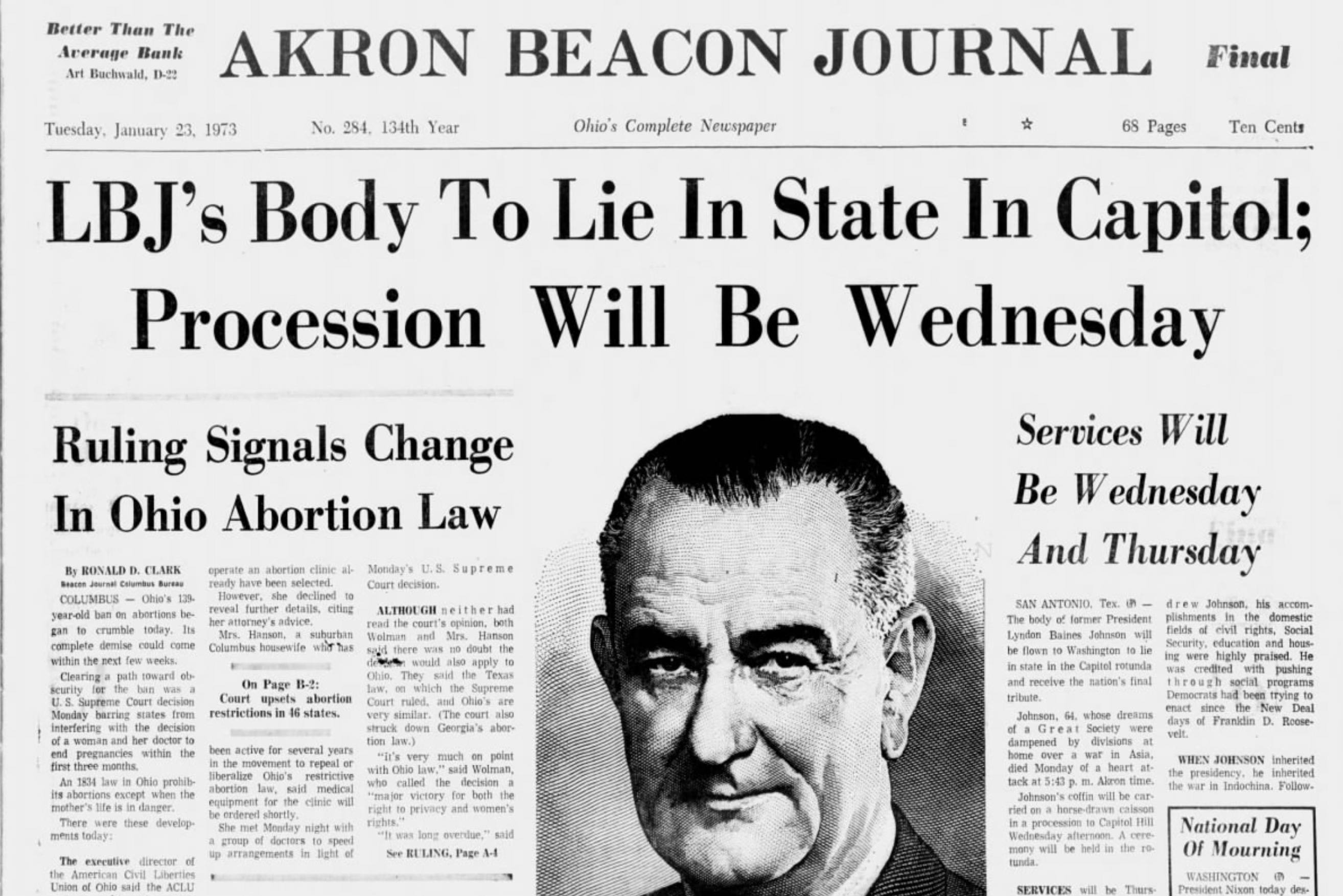
The Supreme Court’s decision in Roe v. Wade legalized abortion nationwide. Since that day, more than 63 million unborn children have been lost to abortion in the United States. One decision changed how America viewed money. The other changed how America viewed life. One removed restraint from the nation’s currency. The other removed legal protection from its most vulnerable citizens.
I do not believe those two events belong in separate conversations.
Throughout Scripture, nations that rejected God followed recognizable patterns. They abandoned His standards, embraced false worship, and shed innocent blood. The Canaanites offered their children to Molech. God called it an abomination (Leviticus 18:21). Jeremiah condemned Judah for building the high places of Baal and causing their sons and daughters “to pass through the fire unto Molech” (Jeremiah 32:35). Psalm 106 declares they “shed innocent blood...the blood of their sons and of their daughters,” and that the land itself became polluted (Psalm 106:37–38). Those passages are not isolated stories. They reveal a pattern of national rebellion.
Babylon became the Bible’s enduring symbol of that rebellion. It was wealthy, powerful, and it was proud. Now, the United States has an entire month dedicated to pride.
Nebuchadnezzar erected a golden image and demanded worship. Revelation returns to Babylon, describing a system intoxicated with wealth, commerce, deception, and blood. Revelation 17 and 18 portray a civilization whose economic power and spiritual corruption are inseparable. Gold and blood appear together.
That pattern should not be ignored.
America no longer bows before golden statues, but it has certainly learned to worship prosperity. We celebrate consumption, debt-fueled growth, endless credit, and financial markets as though they are the measure of national health. At the same time, millions of unborn children have been sacrificed while the nation debates the procedure primarily in terms of economics, convenience, autonomy, and personal choice. The idols changed. But sadly, the human heart did not.
Hosea warned that a nation cannot sow rebellion against God without eventually reaping destruction. “For they have sown the wind, and they shall reap the whirlwind” (Hosea 8:7). Proverbs 14:34 declares, “Righteousness exalteth a nation: but sin is a reproach to any people.” Those warnings were not written only for ancient Israel. They reveal how God deals with nations that persist in rejecting His moral order.
Was it merely coincidence that America abandoned sound money in 1971 and legalized abortion nationwide in 1973? Every reader must answer that question personally. I see something more profound. I see a nation removing two anchors within seventeen months: one economic and one moral. Since then, the national debt has exploded from billions into tens of trillions of dollars. Millions of unborn children have lost their lives to abortion. Marriage has weakened, the family has fractured, objective truth has been replaced by moral relativism, and government has expanded far beyond anything the early settlers of this nation could have imagined.
If those two decisions marked a turning point in American history, then the evidence has been accumulating for more than fifty years. Consider what has happened to our nation since these two decisions.
Since the early 1970s, America has experienced more than financial decline. Divorce rates climbed, marriage rates fell, and children born outside of marriage became increasingly common. Church attendance steadily declined while millions abandoned organized religion altogether. Many mainline Protestant denominations traded biblical authority for cultural accommodation, embracing theological positions that previous generations would have rejected. At the same time, pornography moved from the shadows into the mainstream through cable television and later the internet. Movies, television, music, and advertising became increasingly sexualized, while explicit lyrics, coarse language, and graphic violence transformed popular entertainment into something few parents of the 1950s or 1960s would have recognized.
The cultural shift didn’t stop there. Gambling expanded across the country. Consumer debt and dependence on credit became a way of life. Recreational drug use gained widespread acceptance, physician-assisted suicide became legal in multiple states, and same-sex marriage was recognized nationwide. More recently, gender ideology has reshaped education, medicine, and public policy. Technology companies now police speech through “community standards,” while digital surveillance, biometric identification, and data collection have become routine. Trust in government, the media, and even the church has eroded. Birth rates have fallen below replacement level, loneliness and depression have risen, parents have surrendered increasing influence over their children’s education, and local businesses have steadily given way to multinational corporations. Viewed individually, these developments may appear unrelated. Viewed together, they paint the picture of a nation that has drifted steadily away from the moral and biblical foundations that once shaped its culture.
History records dates. Scripture reveals patterns.
In my view, August 15, 1971, and January 22, 1973, were not simply milestones on a calendar. They marked the beginning of a national transformation whose consequences are still unfolding. A nation that abandons objective standards in finance eventually abandons objective standards in morality. When truth becomes negotiable, value becomes negotiable. When value becomes negotiable, life itself becomes negotiable.
Nations rarely recognize God's judgment while they are living through it. They dismiss the warning signs, explain away the consequences, and convince themselves that tomorrow will look like yesterday. Scripture tells a different story. Every nation that abandoned God's truth eventually discovered that His patience is not the same as His approval. America has been removing its foundations for more than half a century. The only question that remains is not whether God keeps His promises, but whether we will return to Him before the consequences become impossible to ignore.