

The Number 33
Mastery, Mimicry, and the Machinery of Power

Today is March 3. Written numerically, 3/3. Thirty-three. A number that has been elevated, ritualized, and embedded into both religious imagination and esoteric systems for centuries. Some dismiss that as a coincidence; others treat it as code.
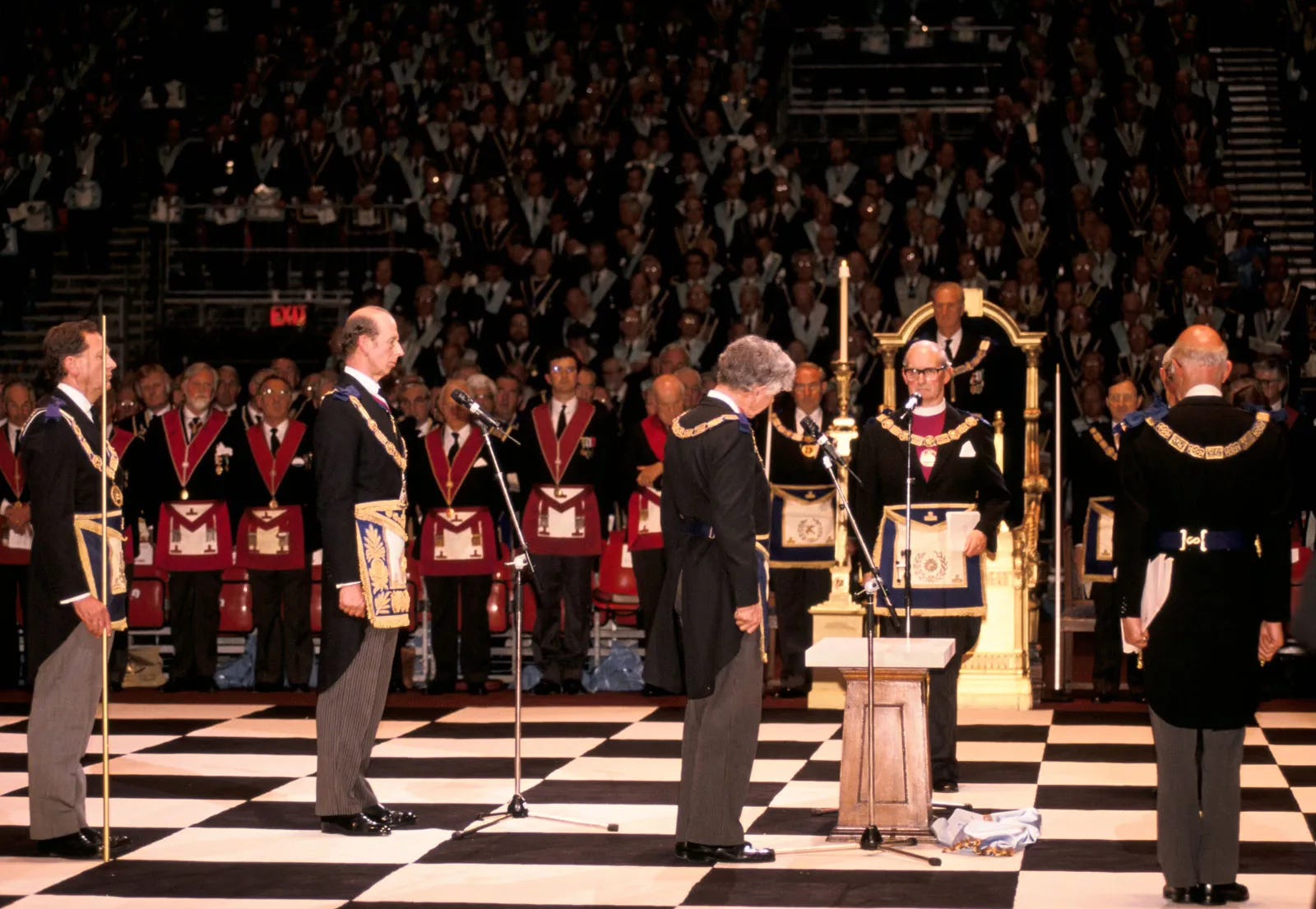
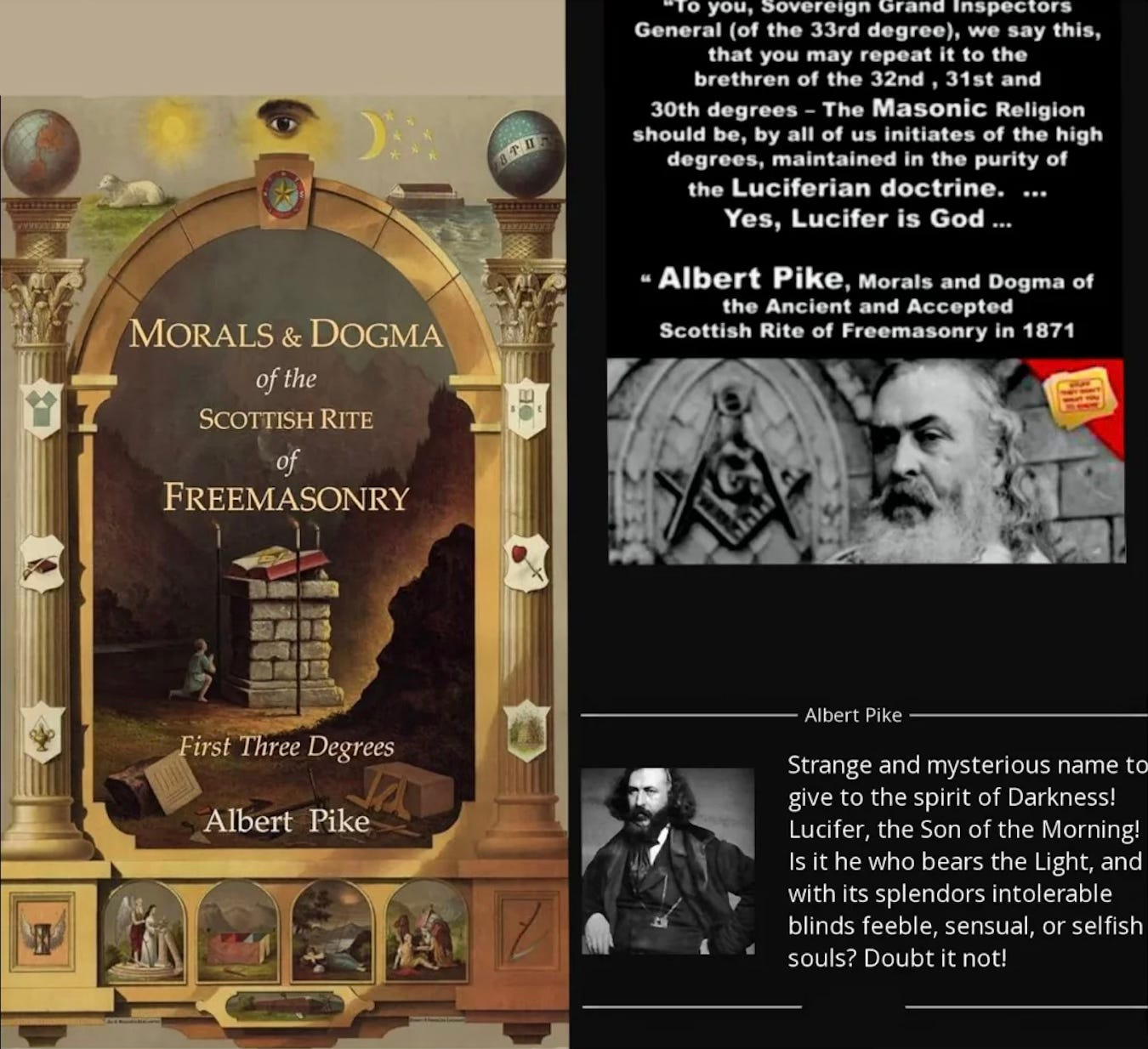
The number 33 didn’t begin with conspiracy forums. It sits at the top of the Scottish Rite of Freemasonry, where the 33rd degree is conferred as an honorary distinction. It is not achieved in the ordinary ladder of advancement; it’s bestowed. Within the structure of the rite, it represents culmination, authority, and stewardship of institutional memory. That alone explains why the number is referenced so often in discussions of elite networks, seen in movies, and noted in books.
Prominent public figures who were 33rd degree Scottish Rite Masons include President Harry S. Truman, FBI Director J. Edgar Hoover, and General Douglas MacArthur. These were not obscure men operating in shadows. They were central actors in American political and military life. Their affiliation doesn’t prove coordination of events, but it does demonstrate that high-ranking members of power structures have historically moved within fraternal orders that elevate symbolic hierarchy.
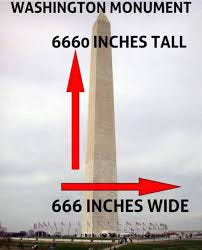
Symbolism extends beyond membership rolls. Consider architecture: the Washington Monument in Washington, D.C. rises to 555 feet, which converts to 6,660 inches (it’s also 666 inches wide). House of the Temple (1733 16th St NW DC): Headquarters of the Scottish Rite Freemasonry, this building is heavily adorned with Masonic, sphinx, and astronomical symbolism. The Zodiacs of D.C.: Author David Ovason highlights over twenty complete zodiacs in the city’s architecture, which he claims were purposefully placed to align with cosmological events. Street Layout: The city’s street plan, laid out by Freemason Pierre L’Enfant, includes geometric shapes (triangles, circles, lines) that are often interpreted as having occult or esoteric meanings. United States Capitol: Its cornerstone was laid with Masonic rituals.
Whether intentional or coincidental (there are no coincidences), that conversion is frequently cited by researchers examining symbolic design in civic structures. Obelisks themselves originate in ancient Egypt as solar monuments representing ascent and divine authority. The replication of that form in modern capitals is not accidental in aesthetic terms. It signals continuity with older traditions of power symbolism.
Thirty-three also appears in the human body. There are 33 vertebrae in the spinal column. In various mystical systems, spiritual ascent is described metaphorically as energy rising along the spine toward illumination. In some strands of Jewish mystical tradition, the number is connected to Lag BaOmer, the 33rd day of the Omer count, associated with hidden wisdom and revelation. In certain Vedic texts, references are made to 33 deities. Islamic prayer beads commonly include cycles of 33 repetitions. Across cultures, the number has been tied to completion, ascent, or authority.
Then there is the biblical dimension. Jesus Christ is traditionally understood to have been about 33 years old at the time of His crucifixion and resurrection. Luke 3:23 states that He began His ministry “about thirty years of age,” and the duration of that ministry is commonly reckoned at roughly three years. The Bible does not assign mystical power to the number 33, but the association with the life and sacrifice of Christ has embedded it in Christian consciousness.
It’s important to draw a clear line. Scripture assigns meaning to certain numbers symbolically within redemptive history. Seven denotes completion. Twelve reflects governance and covenant structure. Forty signifies testing. The Bible does not instruct believers to practice numerology. Occult systems often appropriate biblical motifs and repackage them into esoteric frameworks. That pattern of imitation is historically documented.
Now consider the calendar itself. March 3 has not been a vacant date in history. On March 3, 1857, France and the United Kingdom declared war on China. On March 3, 1923, the first issue of Time magazine was published (Mockingbird Media). On March 3, 1931, “The Star-Spangled Banner” was officially adopted as the national anthem of the United States. On March 3, 1991, video footage of the beating of Rodney King by Los Angeles police officers was broadcast, igniting national unrest and reshaping the conversation around policing and race in America. On March 3, 1933, the Mount Rushmore National Memorial was dedicated. March 3, 1974, a Turkish Airlines DC-10 crashed near Paris, killing 346 people. Political transitions, legislative acts, technological milestones, and cultural flashpoints have all occurred on this date across different years.
What does that prove? It proves that any date, examined long enough, accumulates significance. We as human beings are pattern-seeking by nature. When a number already associated with mystique aligns with a calendar date, attention intensifies.
The more relevant question is not whether something will happen on a symbolically charged day. The more relevant question is whether symbolism is used as a psychological amplifier when events do occur.
Modern institutions understand optics. Corporations launch products on carefully selected dates. Political campaigns stage announcements for maximum symbolic effect. Governments choreograph ceremonies with layered historical references. Strategic communication is a science. In that environment, it would be naïve to assume symbolism is never considered. It would also be reckless to assume symbolism equals orchestration of catastrophe.
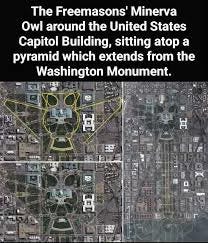
The Washington Monument isn’t the only example of symbolic architecture. The layout of Washington, D.C., has long been analyzed for geometric alignments and Masonic influence, particularly because several Founding-era figures were Freemasons, including George Washington,Benjamin Franklin, John Hancock, Paul Revere (the Freemasons are coming), James Monroe, Andrew Jackson, James Polk, William Whipple, Matthew Thornton, Richard Stockton, John Sullivan, and Gunning Bedford Jr. The use of classical imagery, domes, obelisks, and temple-style facades reflects a deliberate aesthetic continuity with Rome and earlier civilizations. Power has always borrowed from antiquity to legitimize itself.
The Scottish Rite didn’t arrive casually at the number 33. When the Rite formalized in the early nineteenth century, it built its hierarchy around that number and fixed it at the top of its structure. The Thirty-Third Degree became the summit of recognition, the highest honor conferred within the system, reserved for those deemed to have rendered exceptional service to the order and to society. When documented Thirty-Third Degree Masons include men such as Harry S. Truman, J. Edgar Hoover, and Douglas MacArthur, the number ceases to be abstract symbolism and becomes institutional reality. It represents proximity to power, access to networks, and participation in a fraternity that has historically intersected with political and military leadership.
Place that institutional apex beside a date that reads 3/3 and the effect is immediate. If anything significant happens, the number will be absorbed into the narrative within minutes. In today’s media environment, symbols move faster than verified facts. They shape interpretation before investigations even begin. A number does not have to cause an event to influence its impact; it only has to be culturally loaded. Once perception locks in, public reaction often follows long before the mechanics behind the event are fully examined.
The number 33 surfaces repeatedly in modern culture, whether embedded in film dialogue, scripted into television plots, highlighted in corporate branding, or aligned with headline-grabbing dates, and for many observers it functions as a kind of calling card. Sometimes that placement is intentional, and sometimes it’s marketing teams playing with layered symbolism because they know audiences are primed to notice. In an era saturated with media, repetition itself becomes a signal. The more frequently a number appears across entertainment, architecture, ceremony, and calendar moments, the more it imprints on the public imagination. When something significant occurs and 33 is anywhere in the frame, people don’t see randomness; they see messaging. Whether that perception is warranted must be tested with evidence, but the psychological imprint is undeniable.
For those grounded in Christian theology, the ultimate meaning of 33 is not found in fraternal degrees or obelisks. It’s found in the declaration recorded in John 19:30, when Christ said, “It is finished.” If He was approximately 33 years old at that moment, the number is associated with completed redemption, not secret mastery.
Occult traditions often imitate sacred themes, invert them, and build parallel structures of symbolism. That pattern has existed for centuries. Recognizing imitation does not require attributing omnipotence to those who practice it.
The machinery of power in the modern world runs on finance, legislation, military capacity, intelligence networks, and corporate influence. Those mechanisms operate regardless of the calendar. Symbolism may decorate the surface, but policy is written in boardrooms and committee chambers.
So as March 3 approaches, the disciplined posture is neither mockery nor panic. It’s awareness without superstition. Study the number and understand its history. Recognize its use in fraternal orders, religious symbolism, and architecture. Examine documented affiliations of public figures. Base your conclusions on evidence, not fear of what might happen.
Finally, remember what Scripture actually teaches us about power and fear. “For we wrestle not against flesh and blood, but against principalities, against powers, against the rulers of the darkness of this world, against spiritual wickedness in high places” (Ephesians 6:12, KJV). The battle is real, but it’s not fought through superstition or panic. And we don’t face it trembling at symbols on a calendar, because “God hath not given us the spirit of fear; but of power, and of love, and of a sound mind” (2 Timothy 1:7, KJV). Whatever numbers men elevate, whatever signals they flash, our response is not anxiety but clarity, not hysteria but discernment, anchored in truth rather than driven by fear.
Our next article, dropping March 5, will examine how Freemasons helped steer the transition from the Articles of Confederation to the Constitution, centralizing power in the new federal structure. We will also examine the Anti-Federalists who fought to resist that consolidation and warned about the dangers of concentrated authority.
George you never cease to amaze me with your knowledge and dedication. You have definitely made me more aware of many things I wasn’t ready to accept. The scales have been ripped from my eyes and what a wonderful gift to see everything now with 20/20 vision. Thank you for forfeiting your time to bring us such incredible work.
I have always been interested in symbolism and the battle of Good v Evil. You are insightful and I always look forward to your interpetation and analysis based upon Christian Theology. RTM (Bo)