

Remembering Terrance Yeakey
From Medal of Valor to a Death That Was Never Explained

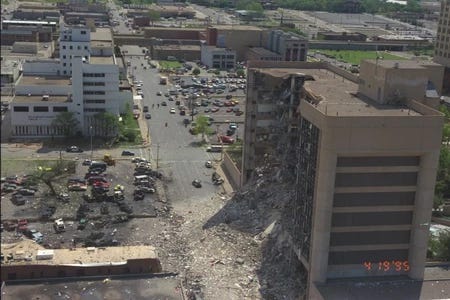
The story of Terrance Yeakey doesn’t begin with suspicion; it begins with action, with a man moving toward a collapsing structure on April 19, 1995, when bomb(s) detonated outside (and inside) the Alfred P. Murrah Federal Building. In the first minutes after the blast, when the building was still unstable and the extent of the damage was not yet understood, Yeakey entered the debris and pulled survivors out with his own hands. He didn’t hesitate, didn’t wait for instruction, and did not treat the moment as anything other than a duty that had to be carried out immediately. That part of the record has never been in dispute. He was recognized for it. He was awarded the Medal of Valor. He was, by every standard applied in that moment, exactly what the public expects of a police officer when it matters the most.
What follows doesn’t fit inside that clean recognition, and that’s where the story shifts. According to those who knew him, including statements preserved in interviews and family accounts, Yeakey didn’t come away from the Murrah Building with a sense of closure. He came away with questions, and became increasingly focused on what he believed didn’t align between what he personally witnessed and what was being presented publicly. This was not described as a passing concern or a reaction that faded with time. It developed into deliberate action. He began documenting what he saw, gathering material, and storing information outside of Oklahoma City. He wasn’t disengaging from the event. He was moving deeper into it, intending to preserve details he believed were being overlooked or altered.
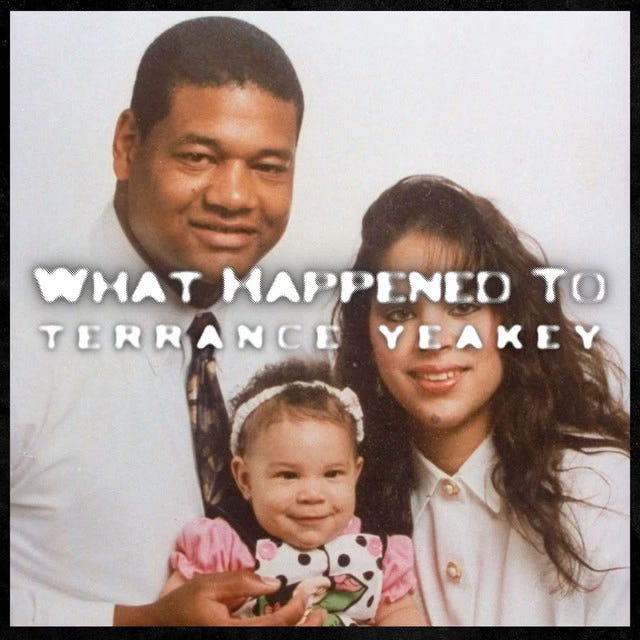
The accounts from his ex-wife, Tonia Yeakey, converge on a single point: he believed he was being watched. In a recorded radio interview, she describes a man who spoke plainly about being followed and chose to confront it rather than live around it. His last known words to a friend were just as direct—he said he would shake the federal agents he believed were tracking him and then come back. He never did. That moment stands as the final clear statement of his intent, spoken in his own words and confirmed by those who heard it.
Luke 8:17 — “For nothing is secret, that shall not be made manifest; neither any thing hid, that shall not be known and come abroad.”
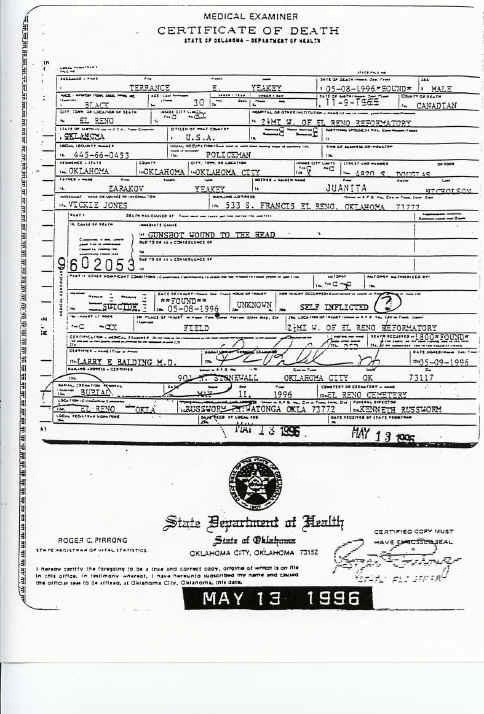
His body was found the following day in a field near El Reno, Oklahoma, more than a mile from his abandoned vehicle. The condition of the scene introduced immediate contradictions that have never been resolved in a way that satisfies those who have examined it closely. Reports describe a large amount of blood in his vehicle, evidence suggesting restraint, ligature marks on his wrists and neck, and multiple deep cuts across his body. The fatal wound was a gunshot to the right temple at an angle that has been questioned by independent observers. The weapon itself was not initially present at the scene and was later reported to have been found under circumstances that raised further concern. These are not minor discrepancies. They define the difference between a controlled act and a chaotic one, between a narrative that holds together and one that fractures under basic scrutiny.
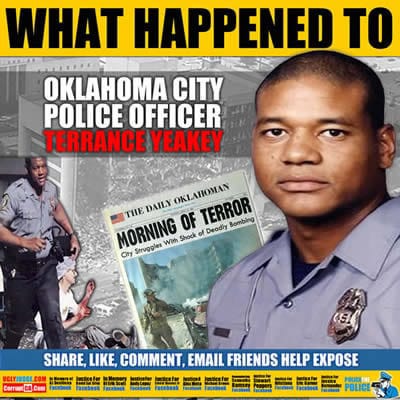
The official ruling was suicide. That conclusion requires acceptance of a sequence of events in which a man inflicts extensive injuries upon himself, relocates away from his vehicle, and completes the act without leaving behind the kind of evidence typically associated with such a conclusion. It also requires accepting that the materials he had reportedly been compiling—notes, documents, and observations tied to what he believed he witnessed on April 19—were never clearly recovered or accounted for. For a man described as methodical and intentional in the weeks leading up to his death, the absence of that material is not a detail that can be set aside. It’s central to understanding what he was doing and why it may have mattered.
Classic Audio: Remembering Terrance Yeakey
The broader case surrounding the bombing was resolved in court with the conviction of Timothy McVeigh and the imprisonment of Terry Nichols. That outcome fixed responsibility in the legal sense, but it didn’t settle every question that surfaced in the days and weeks that followed. Early in the investigation, “John Doe #2” was the subject of a nationwide manhunt, described by witnesses and widely circulated; then, without a clear public accounting, the search was called off, and the figure was dismissed. It did not, however, address every account, every witness, or every anomaly connected to the aftermath. Reports from first responders and witnesses have at times included references to multiple explosions or inconsistencies in the sequence of events, and some have cited seismic data as suggesting more than a single blast. These claims remain disputed and are not part of the official conclusion, but their existence contributes to the environment in which Yeakey’s concerns developed.
Placing Yeakey’s death inside that environment doesn’t require speculation beyond what’s already documented. It requires following an already established timeline. A first responder enters a disaster and performs acts that are publicly recognized as heroic. In the months that follow, he becomes increasingly focused on discrepancies between what he saw and what is being reported. He begins documenting those concerns. He tells those closest to him that he is being followed. He disappears after stating he intends to evade that surveillance. He’s found dead under conditions that introduce significant questions about the official ruling. The materials he was compiling are not clearly recovered. His family rejects the conclusion given.
There are only two ways to look at it: accept the official conclusion and move on, or recognize that it doesn’t fully explain the facts and leave the question open. The second choice doesn’t force an answer; it simply refuses to close the case when it hasn’t been clearly resolved. We owe it to Terrance Yeakey’s family and those who knew him to keep asking the hard question: what really happened?
Psalm 37:28 — “For the LORD loveth judgment, and forsaketh not his saints; they are preserved for ever: but the seed of the wicked shall be cut off.”
Remembering Terrance Yeakey means facing what follows the hero narrative: he said what he saw at the Alfred P. Murrah Federal Building didn’t match the official account, he began documenting it, he spoke about being followed, and then he was found dead under circumstances ruled a suicide that his family rejects. If his account aligned, there would be nothing to correct; if there was nothing to hide, there would be no reason for pressure; if his death were clear, it would no longer be in question. The unresolved issue is simple and direct: what did he see that someone didn’t want on record?
My goodness. Surely not another suicide with zero evidence from that person or their family that the person was suicidal beforehand? I'm thinking of Chris Cornell et al. Do the authorities recognise the term suicided?