

Freedom Is a Responsibility
A Forgotten Call to Responsibility in an Age of Entitlement

Bible verse of the week:
“Cast thy burden upon the Lord, and he shall sustain thee: he shall never suffer the righteous to be moved.”
Psalm 55:22 (KJV)
Application:
A man was walking a long road at night with only a small lantern. He wished the light would show the entire path, but it only gave enough light for the next few steps. Each time he stopped, the darkness pressed in. Each time he moved forward, the light met him there. By morning, he realized the lantern never failed him. It simply required trust. Christ does not promise to show us the whole road at once. He promises to walk with us step by step, if we will follow.
This week in history:
January 20, 1961
A Call to Responsibility
When John F. Kennedy stood on the Capitol steps in January 1961, the nation was anxious, divided, and standing at the edge of an uncertain future. The Cold War loomed. Trust in institutions was fragile. Americans were asking what kind of country they were becoming.
Kennedy’s inaugural address is remembered for one line above all others, but its power runs deeper than a slogan.
“Ask not what your country can do for you — ask what you can do for your country.”
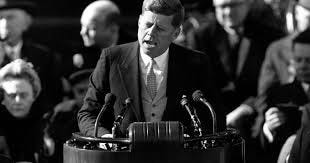
That sentence was not about blind obedience to the state. It was a rebuke of entitlement. A reminder that a republic cannot survive when its people see themselves only as consumers of benefits rather than stewards of responsibility.
Another line is often forgotten, but it matters just as much:
“Let every nation know… that we shall pay any price, bear any burden… to assure the survival and the success of liberty.”
Liberty, in Kennedy’s framing, was not free. It demanded sacrifice, discipline, and moral seriousness. Those are words we rarely hear today.
If liberty demands sacrifice, discipline, and moral seriousness, then Christians should not be surprised. That is the language of discipleship.
Christ never offered freedom without a cost. He said plainly, “If any man will come after me, let him deny himself, and take up his cross daily, and follow me.” Liberty in Christ is not the absence of restraint. It is freedom from sin’s mastery so that we may serve God rightly.
Sacrifice, in a Christ-like sense, begins with choosing obedience over convenience. It means refusing to accept lies even when the truth costs friendships, careers, or comfort. It means placing faithfulness to God above applause from the culture.
Discipline is not legalism; it’s training the soul. Paul compares the Christian life to an athlete who brings his body into subjection, not to earn salvation, but to finish the race without shame.
Moral seriousness means recognizing that choices matter. Words matter. Private sins do not stay private forever. A nation loses liberty when its people lose reverence for truth. Christians are called to live as witnesses, not spectators, knowing that judgment begins at the house of God.
Christ-like liberty does not demand rights. It lays them down. Jesus did not cling to His position, but humbled Himself, even unto death. That posture does not weaken a people. It strengthens them from the inside out.
If Americans are searching for freedom without sacrifice, they will never find it. But if Christians recover the willingness to deny themselves, to discipline their lives, and to walk in holiness, they become salt again. And salt preserves what would otherwise decay.
True liberty is not found in demanding more from the world. It is found in yielding more of ourselves to Christ.
A Line Worth Recovering
Kennedy closed by calling Americans to “a long twilight struggle,” not a quick fix.
That line rings truer now than ever.
There is no shortcut out of moral collapse. No policy can replace character. No economy can heal a nation that has forgotten God.
But there is hope where responsibility is reclaimed. Where men lead their households. Where churches preach truth instead of trends. Where citizens stop asking what they are owed and start asking what they are called to do.
That question is not outdated.
It is overdue.
AMEN!!
Perhaps there will be recognition of the need to serve others. We have a "free" society because many of us served in the military. Others have served in other ways. I have more respect for the CO's who chose to follow their beliefs and served in hospitals, Hospice, or other community service. When a society feeds at the free trough, they are not free..they are dependent on the rest of us. Follow your higher power to make our society a better place for all. RTM (Bo)