

Exposing Dispensationalism
Prophecy, Zionism, and the Corruption of Modern Evangelicalism

Today, my new book Exposing Dispensationalism has been officially released.
When I went on hiatus from my other podcast last August, I closed that episode with a definitive statement: I believe the most dangerous theological system confronting the modern church is dispensationalism. Since that moment, this book has become a priority. What began as concern eventually became months of deep historical research, biblical examination, and investigation into the origins and consequences of the system that has reshaped modern evangelical Christianity for more than a century.
I went back and forth for a while over whether to even write this book because I already know what the reaction will be in some circles. The title alone will make people angry. Some will immediately dismiss the book without reading a single chapter. Others will accuse me of attacking Christianity itself simply because I’m challenging a theological system that has become deeply embedded within modern evangelical culture. One uncomfortable historical fact many Christians never hear in church is this: the modern dispensational system dominating evangelical prophecy culture today didn’t even exist in its recognizable form until the 1800s. But after spending months researching the origins, spread, influence, and consequences of dispensational theology, I became convinced that remaining silent would have been easier — but far less honest.
Purchase My New Book: Exposing Dispensationalism
This book was not written lightly. It wasn’t written impulsively after watching a few videos or reading a handful of articles online. It was built through historical investigation, biblical examination, and careful research into the men, institutions, seminaries, publishing networks, prophecy conferences, and theological systems that reshaped evangelical Christianity over the last century and a half. The deeper I dug into the history of John Nelson Darby, C.I. Scofield, the Scofield Reference Bible, Christian Zionism, prophecy culture, and the rise of modern end-times sensationalism, the more I realized this subject reaches far beyond charts and timelines. Dispensationalism altered the posture of the modern church itself.
That is the heart of this book.
Dispensationalism is a modern theological system that divides biblical history into separate dispensations or administrations in which God supposedly deals with humanity differently across different ages. At the center of the system is a sharp separation between Israel and the church, a future pre-tribulation rapture removing believers before a seven-year tribulation, and the belief that modern geopolitical Israel occupies the central role in end-times prophecy. Over time, the system became deeply connected to Christian Zionism, prophecy conferences, seminary systems, study Bibles, and modern evangelical media. Through the influence of the Scofield Reference Bible, dispensational theology was inserted directly alongside the biblical text, conditioning generations of Christians to interpret Scripture through prophetic charts, institutional traditions, and speculative end-times frameworks. The system also helped popularize doctrines such as the gap theory in Genesis, the postponement of Christ’s kingdom, and the expectation that believers will escape tribulation rather than endure through it. What began as a relatively obscure nineteenth-century doctrine eventually became the dominant prophetic framework throughout much of evangelical Christianity, reshaping how millions of believers understand prophecy, suffering, Revelation, Israel, war, and the return of Jesus Christ.
For many Christians today, dispensational theology feels ancient. It feels inseparable from Christianity itself. Entire generations grew up hearing about the pre-tribulation rapture, the separation between Israel and the church, the rebuilding of the temple, the prophetic clock of Israel, and the expectation that believers will escape before tribulation intensifies on the earth. Most never stop to ask where these ideas originated historically or whether the earliest Christians taught anything resembling the modern system that now dominates much of evangelical culture. They inherited the framework before they ever investigated it.
That realization should disturb every serious believer.
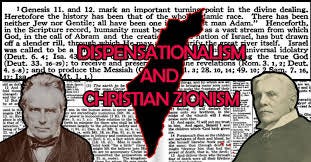
One of the strongest themes running throughout Exposing Dispensationalism is the difference between Scripture itself and systems layered over Scripture. That distinction became especially clear while researching the Scofield Reference Bible. Millions of Christians believed they were simply reading the Bible while unknowingly absorbing a theological framework printed directly beside the sacred text. Over time, the notes became almost inseparable from the verses in the minds of many readers. A generation arose that no longer distinguished between the Word of God and Scofield’s interpretive system surrounding it.
That is extraordinarily dangerous territory for the church.
The issue is not whether study help is evil. The issue is authority. Once believers begin trusting systems, charts, headings, notes, conference teachers, and prophecy personalities more than the plain flow of Scripture itself, discernment begins collapsing. The Bible becomes filtered through inherited assumptions. Entire passages are reassigned, delayed, compartmentalized, or redirected in order to protect the framework. Warnings to believers are shifted elsewhere. Tribulation passages are moved away from the church. Endurance is softened by escapism. The direct teachings of Christ take a back seat to maintaining the prophetic system.
That’s not a small theological disagreement. That reshapes how Christians view suffering, discipleship, endurance, persecution, holiness, and even the mission of the church itself.
One of the most difficult sections of this book deals with war and geopolitics. I say difficult because I’m a veteran who served through multiple combat deployments. I know what war costs. I’ve seen what propaganda does to populations. I’ve watched governments shape narratives. I’ve watched young men carry burdens most civilians will never fully understand. Over time, I became increasingly disturbed watching portions of modern evangelical culture treat Middle Eastern conflict almost like prophetic theater. Entire ministries built audiences around speculation surrounding Israel, Iran, Russia, Armageddon, Antichrist systems, and international collapse while millions of innocent people continued suffering beneath the headlines.
Christians are not called to romanticize war.
Jesus Christ said, “Blessed are the peacemakers.” Yet much of modern prophecy culture conditions believers to view escalating conflict as spiritually exciting because they believe it advances the prophetic timeline. That mindset changes how people think. It changes how churches pray. It changes how Christians approach foreign policy. It changes how believers emotionally process suffering happening to real human beings made in the image of God.
This book confronts that directly.
But let me be equally clear about something else: Exposing Dispensationalism is not an attack on sincere Christians. Many godly believers honestly inherited dispensational teaching. Many pastors never examined the historical origins of the system because they themselves inherited it from seminaries, study Bibles, Bible institutes, prophecy conferences, and denominational traditions. This book is not about hatred; it’s about examining the truth. It’s about testing systems against Scripture instead of assuming popularity equals truth.
The Bereans were praised because they searched the Scriptures daily to see whether what was taught to them was true. That responsibility still belongs to believers today.
“My people are destroyed for lack of knowledge: because thou hast rejected knowledge, I will also reject thee...” — Hosea 4:6 (KJV)
One of the greatest tragedies in the modern church is how many Christians know prophecy systems better than they know the Bible itself. They can explain timelines, rapture theories, and end-times speculation, yet struggle to explain sanctification, repentance, biblical endurance, holiness, or the nature of the New Covenant. They have been conditioned toward excitement rather than depth. Toward sensationalism rather than discipleship. Toward speculation rather than spiritual maturity.
The apostles prepared the church differently.
The New Testament repeatedly warns believers about deception, persecution, tribulation, false teachers, endurance, patience, steadfastness, and faithfulness under pressure. Jesus warned repeatedly, “Take heed that no man deceive you.” Paul warned of falling away and strong delusion. Revelation praises the patience of the saints. Yet much of modern evangelical culture became consumed with escape theology, prophecy entertainment, and geopolitical obsession while biblical literacy steadily declined around it.
That is one of the central burdens behind this book.
As the chapters unfold, readers will examine the origins of dispensational theology, the life and influence of John Nelson Darby, the deeply controversial background of C.I. Scofield, the theological influence of the Scofield Reference Bible, the role of seminaries and prophecy conferences, the rise of Christian Zionism, the transformation of evangelical political identity, the Balfour Declaration, the creation of modern Israel, the pre-tribulation rapture doctrine, modern prophecy sensationalism, and the growing atmosphere of fear and manipulation that has overtaken much of contemporary evangelical culture.
But the final chapters shift direction entirely.
Because this book is not merely about exposing error. It is about calling the church back to something stronger, older, and far more stable than modern systems. It is a call back to the authority of Scripture itself. Back to Christ-centered interpretation, holiness, discipleship, courage, biblical literacy; back to preparing believers to endure faithfully instead of conditioning them for escapism.
The church does not belong to Darby.
The church does not belong to Scofield.
The church does not belong to prophecy conferences, celebrity teachers, or institutional systems.
The church belongs to Jesus Christ.
That’s ultimately why I wrote this book. Not to provoke controversy for its own sake, but because I believe the modern church has drifted dangerously far from the simplicity and authority of the Word of God. Too many believers inherited systems they never investigated. Too many pastors inherited assumptions they never challenged. Too many Christians now interpret the Bible through charts and theological frameworks before simply allowing Scripture to speak.
That cannot continue indefinitely without consequences.
Today, Exposing Dispensationalism finally goes public. Some readers will strongly disagree with portions of it. Others may find themselves challenged in ways they didn’t expect. But my prayer is simple: that believers would begin searching the Scriptures carefully again for themselves rather than surrendering discernment to systems, traditions, institutions, or personalities.
Because systems can fail.
Institutions can drift.
Teachers can be wrong.
But the Word of God still stands.
Tonight’s special edition of Foundations In Faith Radio on WRMI will also be released as a podcast across all my podcast platforms. The broadcast will break down the major themes of Exposing Dispensationalism, including the origins of the system, the influence of Darby and Scofield, the rise of Christian Zionism, the rapture doctrine, modern prophecy culture, and the urgent need for the church to return to the authority of Scripture. Whether you listen by shortwave radio or podcast, this will be one of the most important broadcasts I have ever produced.
God bless you.
Thank you for all that you do!
I have always appreciated your "research and documentation." RTM (B0)