

Engineered Outrage and the War for Your Mind
From Bernays to Davos, understanding the machinery behind modern conflict

There was a time when neighbors disagreed about weather, crops, or whose dog tore up the yard, and then they shook hands and got on with life. Today, people wake up already angry at strangers they have never met because a screen told them to be. That shift did not happen by accident. It was cultivated, refined, and delivered with intention. And if we are honest about it, we have participated by giving it our attention.
Remove television and the internet for a moment and think about what remains. You still have your family. You still have your church. You still have the people you see in the grocery store, at the ball field, or across the street. Most of those people are not plotting harm against you, and most of them are trying to make it through another week just like you are. Yet many of us feel hostility toward them because we were told to care deeply about conflicts taking place hundreds or thousands of miles away, events that we cannot influence and often cannot verify. The result is division among people who otherwise could live in peace.
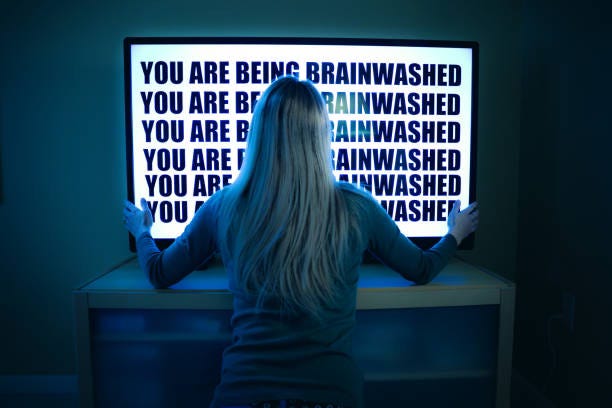
Evil has existed since Genesis 3, and it occurs somewhere every minute of every day. Violence, corruption, exploitation, and kleptocracy never stopped. What deserves examination is not the existence of wrongdoing but the selective spotlight that determines which story becomes the outrage of the week. One tragedy receives endless coverage while another disappears without mention. One narrative is amplified while another is buried. This is not journalism in its pure sense. This is framing, shaping, and directing emotion toward approved targets.
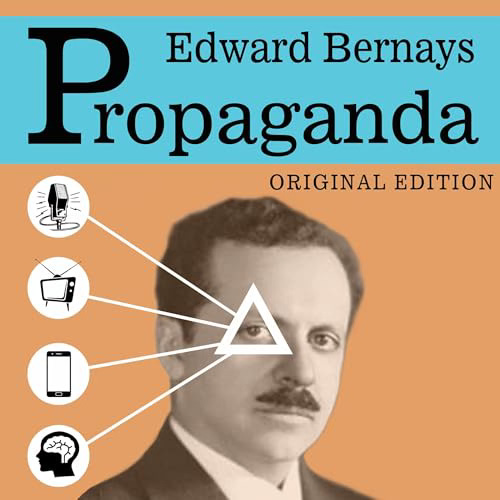
Edward Bernays wrote openly about this process nearly a century ago. He described the engineering of consent as the mechanism by which public thought could be molded through carefully managed messaging. He did not hide the premise that populations could be guided like a herd if information channels were controlled. That idea matured into modern mass media practice, and with digital platforms, the scale expanded beyond anything he could have imagined. The principle remains unchanged. Attention is currency, and whoever directs attention influences perception.
That’s why conflict, fear, and division sell. A population arguing with itself does not examine the architects of the argument. While citizens debate talking points handed to them, decisions are made in rooms they will never enter. Gatherings of political and economic elites, whether at Davos or elsewhere, are presented as cooperation for the good of humanity, yet their priorities rarely align with the daily concerns of working families. The language is polished and reassuring, but the concentration of influence is unmistakable. People are encouraged to view themselves as participants in a grand vision while their autonomy quietly erodes.
Many observers connect this consolidation of influence to what has long been called the New World Order, an idea that power structures seek unified authority over economies, governance, and thought. Whether one uses that term or another, the trend toward central control is visible. When control extends beyond policy and enters moral philosophy, spiritual implications cannot be ignored. Scripture teaches that rebellion against God does not vanish; it organizes itself. Some see in modern ideological movements echoes of ancient opposition to divine authority, what they describe as a Luciferian impulse to elevate human will above God’s order.
This is why discernment matters more than outrage. Outrage is easy to provoke and easier to exploit. Discernment requires humility before the Lord and distance from the emotional machinery of media cycles. Psalm 118:8 reminds us plainly, “It is better to trust in the LORD than to put confidence in man.” That instruction is not abstract poetry; it’s practical survival guidance. When confidence rests in institutions, personalities, or headlines, the foundation shifts with every new broadcast. When trust rests in God, the foundation remains steady regardless of narrative storms.
Do not misunderstand the point as a call to ignorance. Awareness of events has value, and seeking the truth is honorable. The danger lies in surrendering spiritual and emotional stability to a constant stream designed to provoke reaction rather than reflection. If something dominates coverage, ask why. If something disappears, ask why. If anger rises instantly, pause and examine the source. This posture is not apathy. It is vigilance.

Division thrives when believers forget their identity and adopt the identity handed to them by pundits. Scripture calls us to unity in Christ, not uniformity in opinion crafted by media strategists. When followers of Jesus mirror the hostility promoted on screens, they unintentionally serve the same forces that profit from discord. Refusing that role is an act of quiet resistance and faithful obedience.
Tomorrow morning, headlines will attempt to tell you what deserves your attention and how you should feel about it. Before engaging, remember who benefits from your agitation and who benefits from your peace. Remember that God has not delegated your conscience to broadcasters or commentators. Remember that deception rarely announces itself openly but often wraps itself in urgency and righteousness.
Trust in the Lord, test what you hear, and guard your heart. Refuse to be played against your neighbor for someone else’s agenda. That posture will not make you popular in an age addicted to outrage, but it will keep you grounded in truth when many are drifting wherever the current pushes them next.
I follow an English podcaster by the name of Miri AF (aka Miri Finch). She has long written about the MSM and it artificially pushing issues, celebrities, authors and many undesirable people on us. She coined the phrase 'If you know their name they're in the game'. Briefly if the press are publishing an issue relentlessly there is an ulterior reason for it. In particular, personalities, in the UK are promoted to psy op you into a state of mind to follow 'their' agenda. The press will not promote anything or anybody if they are not serving 'their' agenda. Please see https://substack.com/@miriaf
Hey George, I’m reading The Controversy of Zion by Douglas Reed after you mentioned it. It d love you to give your thoughts on it sometime. It’s tricky reading his views that the bible is fabricated. As usual chew the meat spit out the bones but these are big bones!
Thanks.